If you’ve ever sat in a safari vehicle hoping to witness “the big chase,” you’ll know this feeling: the guide whispers lion, everyone freezes, the herd bolts, dust everywhere, yet somehow the antelope is already halfway across the savanna while the lion looks like it’s questioning its life choices.
I’ve seen this play out so many times that I’ve started paying more attention to the antelopes than the predators. They’re honestly the ones who surprise me the most. Some of their evasive tricks look so intentional that you can almost imagine them thinking, Nope, not today.
Each species has its own survival routine, and some of them are wild (in the best way).
Impalas: Built for Sudden Decisions
Impalas are the Olympic athletes of the bush, and they know it. When anything remotely suspicious happens: a rustle, a shadow, a tourist coughing, they don’t just run. They launch themselves as if someone pressed an eject button.
Their zigzagging is honestly impressive. They change direction so fast that even watching them feels like doing cardio. And the jumps… those jumps. Up to ten meters in one leap. I’ve photographed impalas mid-air and still wonder how something so delicately looking can explode with that kind of power.
Scientists say the big leaps help them shake off predators and confuse anything in pursuit. Makes sense. If twenty impalas suddenly start bouncing in different directions, no lion on earth can track a single one.
I mean, just take a look at the video below where an impala just JUMPS over a lion, wow!
Springboks are the ones that always make me laugh. Their famous pronking, that stiff-legged, straight-up jump, is so dramatic that it looks like they’re showing off for the camera.
But it’s not just flair. Some researchers believe they’re telling predators, “I’m strong, pick someone else.” Others think the jumps simply make it harder to predict where they’ll land next.
Good old David Attenborough explains it all to you in the video below with his typicle voice 🙂
Either way, the strategy works. And honestly, it’s hard not to admire a springbok that bounces its way out of trouble like a kangaroo that took a wrong flight and ended up in Namibia.
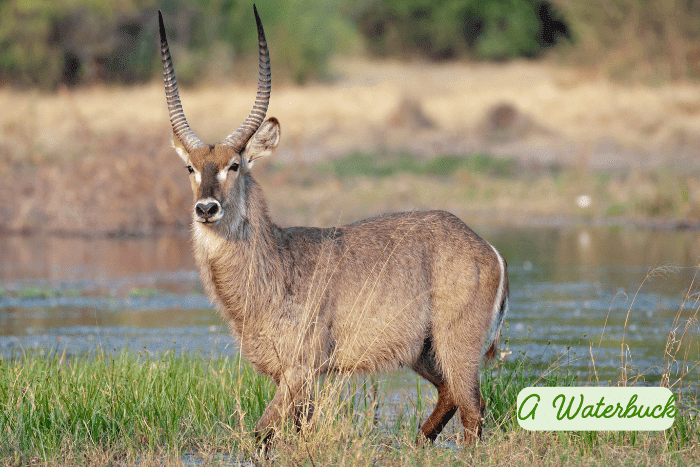
Waterbuck: When in Doubt, Jump in the Pool
Waterbuck are wonderfully practical. When danger approaches, they head straight for one place: water. They don’t hesitate. They don’t debate. They just go.
And predators hate that. Lions and leopards will go in if they must, but they’re not thrilled about it. Add the waterbuck’s natural musky odor—their oily coat gives them this smell that even lions don’t appreciate—and you have a surprisingly effective “please don’t eat me” combination.
I’ve watched a waterbuck leap into a river while a lion stood on the bank, clearly rethinking the whole plan. You can almost feel the lion’s disappointment.
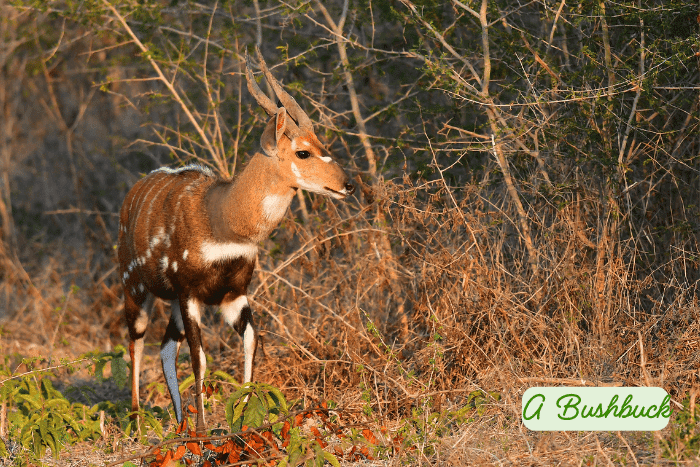
Reedbuck and Bushbuck: The Masters of Staying Invisible
Some antelopes don’t rely on speed at all; they rely on disappearing.
Reedbuck hide so well in the grass that I’ve genuinely stared straight at one and not noticed it until it suddenly burst out and gave everyone (including itself) a fright. They wait until predators are nearly on top of them before bolting, and that shock factor helps them escape.
They slip into thick bushes and freeze completely, trusting their patterned coats to blend in. When they finally dash, it’s in short, sharp bursts through dense vegetation: terrain where big cats simply can’t keep up.
If antelopes handed out awards, bushbuck would win “Best at Vanishing.”
Mixed Herds: Africa’s Version of a Neighborhood Watch
One thing I love about the savanna is how different species casually form alliances. You’ll see impala, wildebeest, and zebra grazing together, and it’s not because they’re feeling social. It’s because they’re running a shared security system.
Zebras spot things at long distances. Wildebeest are excellent at reacting to sounds and smells. Impalas have ridiculously fast reflexes.
Together, they create a 360-degree alarm network. If one species notices trouble, everyone reacts. Predators don’t just face a herd, they face an entire community on high alert.
Why Predators Fail So Often
People love the big predators (I get it), but the truth is that antelopes win most chases. Lions miscalculate, cheetahs overheat, leopards slip on gravel: it happens. And antelopes use every ounce of agility, instinct, and cleverness to stay alive.
They’re not just running. They’re pivoting, dodging, leaping, hiding, and cooperating.
Once you start noticing all these little details, you begin to appreciate antelopes in a whole new way.
A Final Thought
If you ever manage to capture that perfect photo of a springbok in mid-pronk or an impala mid-air, keep it. You’ve caught Africa’s most underrated athletes doing what they do best: escaping with style.
Who am I? Well, the least you can say is that I am quite crazy about Africa, its nature, its climate, its culture, and more.
As a young woman in my twenties, I had already traveled to several African countries by traveling along in an overlander on my own and mostly camping ( or glamping ) and just fell in love with the diversity of it all.
So much, so that at the age of 26, I went back to university to study biology, which, unfortunately, I couldn’t finish because of health reasons (yes, I got sick from a tropical disease, oh cynicism). But this did not stop my dream of traveling back to Africa several times, and I still do.
My dream was back then to leave Europe and go study animal behavior, especially the elephants (sure, that’s every girl’s dream haha), but I am also very much intrigued by hyenas and other “ugly African animals“.
So, I “kind of” have a little bit of a scientific approach to my articles, when I write about African birds, for example. And most of all: the passion.
But life goes on, you move from one side of the country to the other, you get sick again and top it off with lower back problems, and before you know it, you are over 50 hahaha!
Now, I still travel to Africa, but take it a bit “easier” than the good old camping days, and stay in comfortable, yet affordable accommodations, together with my husband Wouter.
These are some of the countries I have traveled to: Kenya, Tanzania, Zanzibar, Malawi, Zambia, Zimbabwe, South Africa, Namibia, Botswana, Tunisia, and a little bit of Lesotho LOL .
While clearly not being African territory, but Spanish, I also visited Gran Canaria and Tenerife, and location-wise, I consider them “African”, because of their climate and nature, sue me :-p
The last trip I took was to South Africa in the year 2023, and it sure got the fevers for Africa back! From the Barberton mountains to the Drakensberg and the Southcoast, one month wasn’t enough at all to see the whole country, so we’ll be back! At ease and with a little bit more luxury than in my younger days haha!