
Giraffes might be the quiet giants of the African savanna, but they speak volumes without ever making a sound. Spending 30 days watching these majestic creatures revealed a hidden world of subtle signals and silent messages that completely changed how I understand them.
The Quiet Life of Giraffes: More Than Meets the Eye
At first glance, giraffes seem like peaceful, solitary browsers — just munching leaves and wandering slowly. But behind those calm eyes lies a complex communication system that depends on subtle gestures, postures, and even inaudible sounds.
Unlike many animals, giraffes don’t rely on loud calls. Instead, they convey mood, intentions, and warnings through body language and quiet cues that only other giraffes can decode.
The Neck Sway That Means More Than You Think
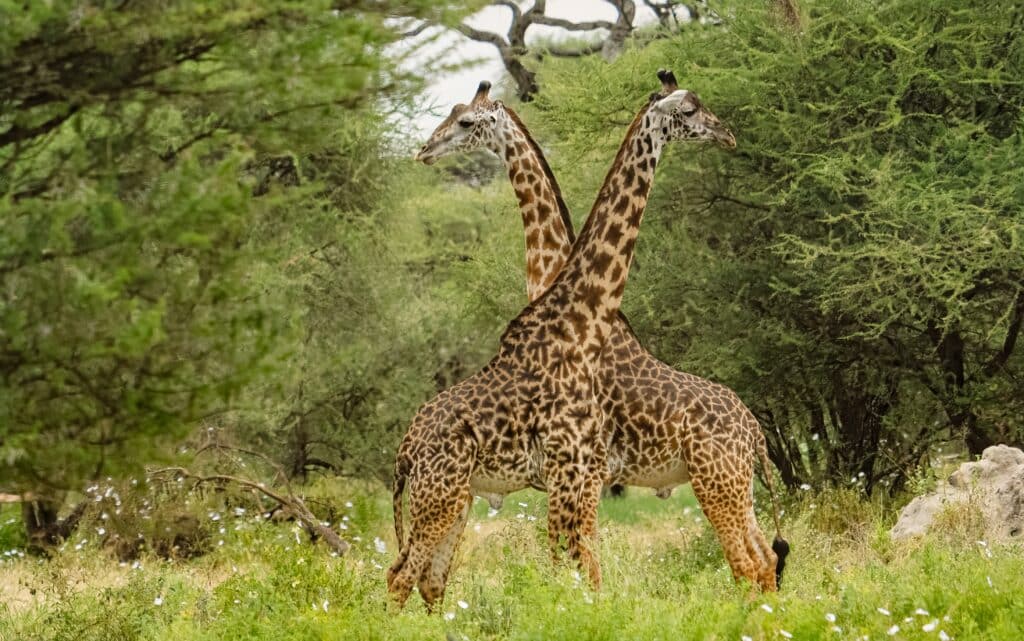
During my month-long stay at a research camp in Tanzania’s Tarangire National Park, I witnessed something most safari tourists never get to see — the intricate, silent language of giraffes. These seemingly quiet giants communicate constantly, just not in ways humans typically notice.
On my third morning, I spotted a dominant male approaching a group of females. Instead of vocalizing, he performed a distinctive neck sway, slow, deliberate, and with perfect rhythm. The females immediately parted, creating space for him at the acacia tree they were feeding on.
A younger male nearby saw this display and quickly retreated, avoiding conflict. Not a single sound was exchanged, yet volumes were communicated.
The Secret Night Behavior Nobody Told Me About
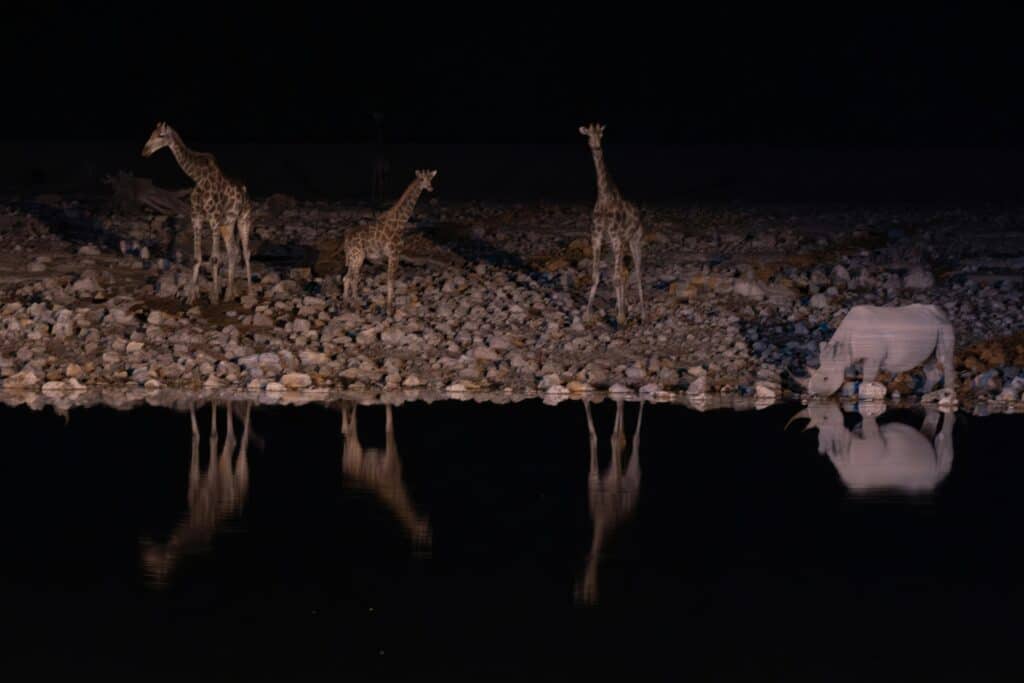
Most tourists see giraffes during daylight hours, feeding peacefully on treetops. What they don’t realize is that giraffes transform completely after dark.
During my overnight observations from a camouflaged blind, I witnessed behavior I’d never seen mentioned in wildlife documentaries. As darkness fell, the herd gathered in a loose circle formation with their heads facing outward, creating a living fortress.
The youngest calves were positioned in the center, while adults took turns sleeping in 20-minute shifts. For every giraffe lying down, several remained standing guard, their heads rotating like periscopes scanning the darkness.
Most fascinating was their use of synchronized movement. When an adult detected potential danger, it would straighten its neck sharply. Within seconds, every adult in the herd would mirror this posture — a silent alarm system effective even in pitch blackness.
The Color-Coded Messages Hidden in Plain Sight
On day seven of my observation period, I noticed something odd through my binoculars. A male giraffe approached the herd, and suddenly, the patterns on several females’ necks appeared to darken. At first, I thought it was a trick of the light.
This turned out to be one of giraffedom’s most fascinating secrets: giraffes can actually control the intensity of their coat patterns through blood flow to certain areas of their skin. This subtle darkening happens during emotional arousal, aggression, or mating interest.
In that moment, I was witnessing females signaling their receptiveness to the approaching male, a visual “conversation” happening through changing coat patterns.
What’s remarkable is that giraffes can read these subtle shade shifts from incredible distances, allowing them to communicate across the savanna without making noise that would attract predators.
The Infrasound Revolution That Changed Everything We Know
It turns out giraffes aren’t silent at all. They communicate constantly using infrasound — extremely low-frequency rumbles that travel through the ground rather than air. These vibrations can travel up to 5 kilometers across the savanna, allowing separated herd members to stay in contact.
The complexity is astonishing — different rumbles for various messages, from danger warnings to location signals to what appeared to be individual identification calls.
Most fascinating was hearing a mother’s infrasound “call” and watching her distant calf immediately respond by changing direction and returning to her, despite being too far away to see her. The calf wasn’t just recognizing a general giraffe call, it specifically knew its mother’s unique vocal signature.
The Death Ritual I Was Never Supposed to See
On day 22, something extraordinary happened. A very elderly female collapsed near our observation area. What followed was unexpected – as the old female lay dying, seven other giraffes, all females, formed a circle around her. They took turns approaching her body, bending their long necks down to nuzzle her. Two stayed with the body overnight, standing guard in what could only be described as a vigil.
Most remarkably, infrared cameras captured the guarding females repeatedly touching their faces to the deceased giraffe’s body before gently pressing their faces to the ground, essentially transferring her scent to the earth in what is now believed may be a primitive form of giraffe “burial ritual.”
The Friendship Bonds No One Talks About
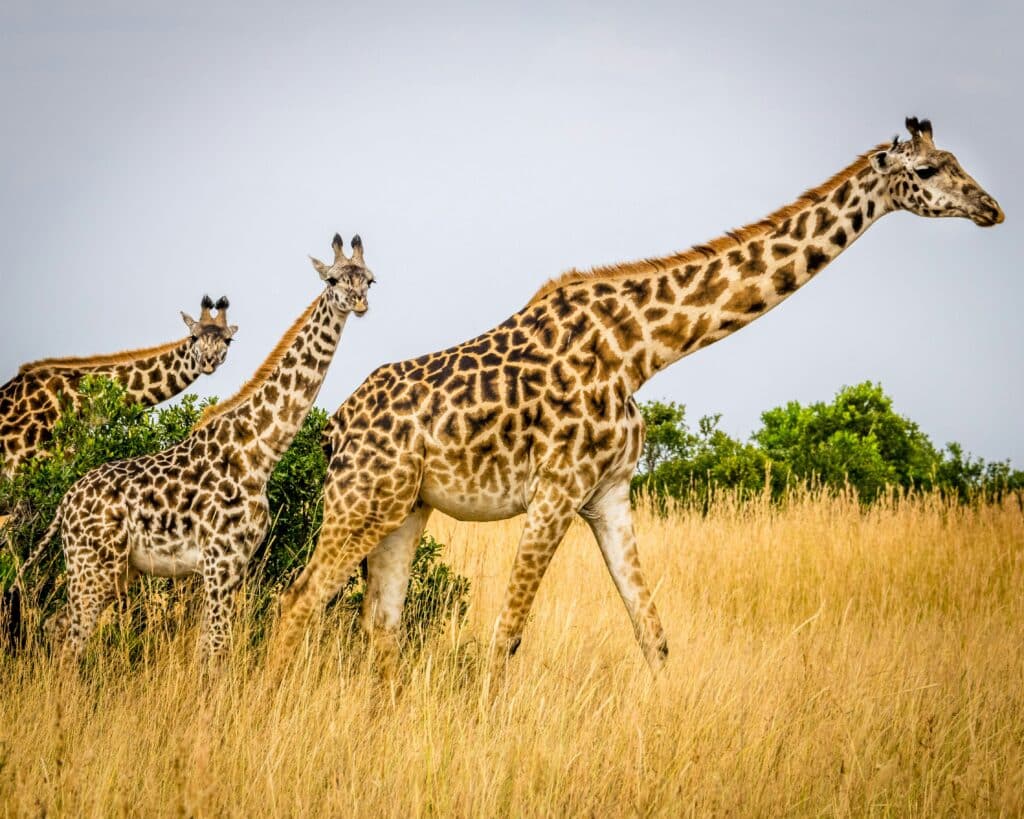
My final week revealed perhaps the most touching aspect of giraffe communication. Through individual identification methods, the researchers showed me that giraffes form strong, lasting friendships.
Specific females consistently sought each other out within the larger herd, fed side by side, and groomed one another using gentle neck rubs. These weren’t random associations; these were the same individuals, choosing to spend time together day after day.
When separated, these “friend pairs” would locate each other using distinct infrasound calls different from those used for other herd members. Upon reuniting, they performed a specific greeting behavior — a gentle crossing of necks that looked almost like a hug.
Most touching was watching a younger female who had lost her calf being “comforted” by another female who consistently stayed by her side for days afterward, often initiating physical contact and sharing feeding spots.
Listening Without Sound: The True Voice of Giraffes
Giraffes prove that communication isn’t always about noise. Their silent language is a beautiful reminder that nature’s conversations happen in whispers, glances, and gestures — if you know how to listen.
If you have any questions or comments about giraffe behavior, please feel free to leave them in the comments section below! I wish you amazing wildlife encounters on your African adventures!
And make sure to follow me on my socials for more updates.
Sincerely,
Lizzy
I now have a YouTube channel as well!
YouTube
Hello Africa travellers!
Who am I? Well, the least you can say is that I am quite crazy about Africa, its nature, its climate, its culture, and more.
As a young woman in my twenties, I had already traveled to several African countries by traveling along in an overlander on my own and mostly camping ( or glamping ) and just fell in love with the diversity of it all.
So much, so that at the age of 26, I went back to university to study biology, which, unfortunately, I couldn’t finish because of health reasons (yes, I got sick from a tropical disease, oh cynicism). But this did not stop my dream of traveling back to Africa several times, and I still do.
My dream was back then to leave Europe and go study animal behavior, especially the elephants (sure, that’s every girl’s dream haha), but I am also very much intrigued by hyenas and other “ugly African animals“.
So, I “kind of” have a little bit of a scientific approach to my articles, when I write about African birds, for example. And most of all: the passion.
But life goes on, you move from one side of the country to the other, you get sick again and top it off with lower back problems, and before you know it, you are over 50 hahaha!
Now, I still travel to Africa, but take it a bit “easier” than the good old camping days, and stay in comfortable, yet affordable accommodations, together with my husband Wouter.
These are some of the countries I have traveled to: Kenya, Tanzania, Zanzibar, Malawi, Zambia, Zimbabwe, South Africa, Namibia, Botswana, Tunisia, and a little bit of Lesotho LOL .
While clearly not being African territory, but Spanish, I also visited Gran Canaria and Tenerife, and location-wise, I consider them “African”, because of their climate and nature, sue me :-p
The last trip I took was to South Africa in the year 2023, and it sure got the fevers for Africa back! From the Barberton mountains to the Drakensberg and the Southcoast, one month wasn’t enough at all to see the whole country, so we’ll be back! At ease and with a little bit more luxury than in my younger days haha!
I wish you happy travels!
Kind regards
Lizzy


