Surviving a Thunderstorm in a Rooftop Tent: My Terrifying Experience and What I Learned
You’re lying comfortably in a rooftop tent, nestled above the earth, surrounded by nature. The night is calm, the stars are out, and everything feels perfect — until you hear it. The distant rumble of thunder. And then, out of nowhere, a fierce storm hits. What happened next is something I’ll never forget: surviving a full-blown thunderstorm in a rooftop tent. Here’s what I learned and what you need to know before you ever camp through a storm like I did.
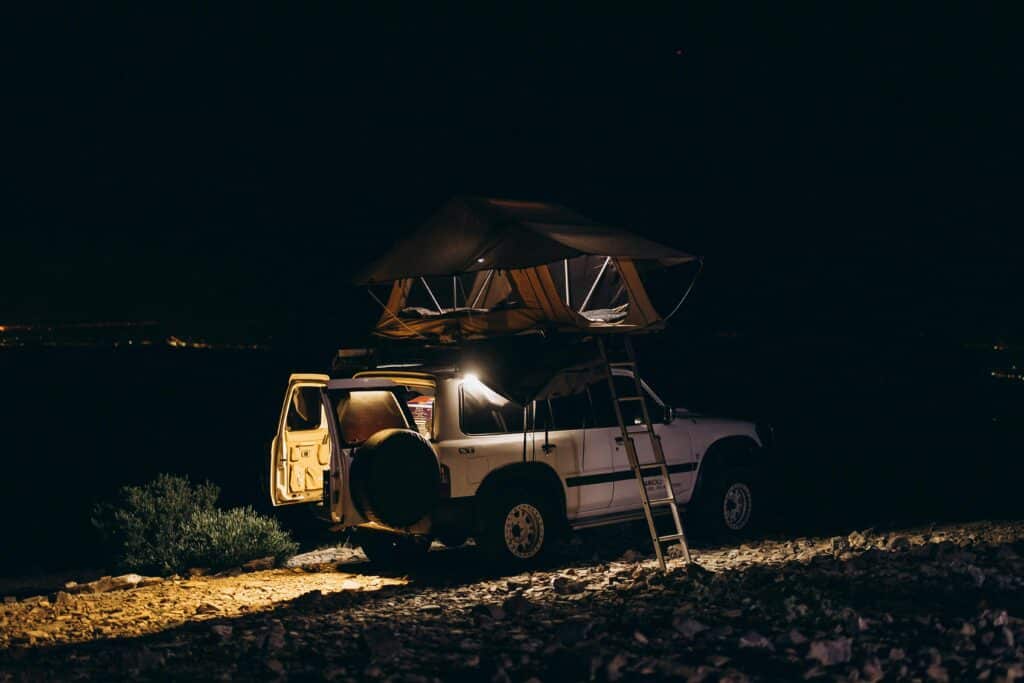
It was supposed to be a peaceful night under the stars. I’d set up my rooftop tent on my 4×4 near a small watering hole in Tanzania, excited to wake up to wildlife at dawn. The weather forecast had mentioned a “slight chance of rain” – the understatement of the century.
Around midnight, I woke to the first raindrops hitting the canvas. No big deal, I thought. My tent was waterproof, and I’d weathered plenty of light rain before. But within minutes, the gentle patter transformed into a deafening roar as rain hammered down. Lightning flashed so frequently it was like a strobe light, illuminating the savanna in harsh white bursts.
The wind came next; gusts so powerful my vehicle actually rocked beneath me. That’s when panic set in. I was essentially sitting in a lightning rod, elevated above the ground, with metal poles supporting my tent.
I clutched my sleeping bag, wondering if I should make a run for it to the vehicle cab below. But the lightning was striking so close that leaving seemed just as dangerous. My heart raced as I realized I was completely unprepared for this situation.
What Actually Happens in a Rooftop Tent During a Storm
The reality of a severe storm in a rooftop tent is nothing like those idyllic Instagram photos. Here’s what it’s actually like:
The tent becomes incredibly noisy. Rain hitting the canvas sounds like machine gun fire, making sleep impossible. Every thunderclap feels amplified when you’re elevated with nothing but thin fabric between you and the elements.
The whole structure sways alarmingly in high winds. My tent was rated for storms, but I discovered there’s a massive difference between manufacturer claims and reality when you’re 7 feet off the ground in gale-force winds.
The metal frame of both the tent and vehicle creates legitimate concerns about lightning strikes. I spent hours calculating the odds of being struck, knowing full well that the Serengeti plains offered few taller objects to attract lightning instead.
Water will find its way in eventually. Despite my tent’s “waterproof” claims, the driving rain eventually started seeping through the zippers and seams. By morning, my sleeping bag was damp in spots.
The Key to Safety in a Rooftop Tent During a Storm
Here are the critical things I learned and tips I would recommend if you’re ever in a similar situation:
Check Your Setup Before the Storm Hits: Always double-check your tent’s straps and anchors before setting off. The wind was my biggest enemy during this storm. A poorly secured tent can become unstable quickly, and that’s the last thing you want when you’re high off the ground.
Position Your Vehicle Strategically: Park your 4×4 in a position where the wind will hit the broadside, not the front of your tent. If possible, use the vehicle to block some of the wind from hitting the tent directly. But make sure the vehicle is parked away from any dangerous areas like trees or cliffs.
Avoid the Top of the Tent: When the wind is at its worst, avoid touching the top of the tent. The more pressure you put on it, the more vulnerable it becomes. Stay in the middle of the tent, where it’s more stable.
Be Prepared for Noise: A thunderstorm in a rooftop tent is loud. The noise from the wind, rain, and the constant battering of water against the fabric will make sleep impossible. Bring earplugs if you’re sensitive to noise.
Always Have Backup Power and Communication: In case the storm knocks out your power or communications, always keep backup sources of power like portable chargers and a satellite phone or two-way radio. You never know when you might need to call for help.
The Aftermath: What I Found the Next Morning
When I woke up the next morning, the storm had passed. The sun was rising, and the world looked eerily calm. I climbed out of my tent, still a bit shaken, but relieved. The storm had passed, and I had survived it. The tent was intact, although a little wet from the rain that had seeped through the fabric during the worst of the storm.
The experience left me with a greater respect for both the power of nature and the design of rooftop tents. They’re built to endure, but you have to respect them — and nature — when it gets rough.
Why You Should Still Camp in a Rooftop Tent
Despite my terrifying experience, I still believe rooftop tents are one of the best ways to camp in the wild. They offer great views, provide safety from ground-based predators, and are far more comfortable than sleeping on the ground.
That said, you need to approach them with caution. Always make sure you’re prepared for the unexpected. A little bit of preparation goes a long way in making sure your adventure doesn’t turn into a nightmare.
My Essential Storm Survival Kit for Rooftop Tents
After that experience, I created a dedicated storm kit that now travels with me on every African adventure:
Heavy-duty tent pegs and guy ropes for additional stability
Portable weather radio with backup batteries
High-quality waterproofing spray
Quick-dry towels for mopping up any water that gets in
Headlamp with red light function (preserves night vision during power outages)
Several large dry bags for protecting electronics and important items
Battery bank for keeping phones charged when you can’t connect to vehicle power
The Wild Side of Africa That Instagram Doesn’t Show
A thunderstorm in a rooftop tent isn’t something I’ll forget anytime soon. But the lessons I learned were invaluable: check your setup, stay calm, and respect the power of nature. With the right preparation and mindset, you can survive (even thrive) through the wildest of storms.
If you have any questions or comments about surviving storms in rooftop tents or want to share your wild weather experiences in Africa, please feel free to leave them in the comments section below! Stay safe out there in the beautiful but sometimes temperamental African wilderness!
And make sure to follow me on my socials for more updates.
Who am I? Well, the least you can say is that I am quite crazy about Africa, its nature, its climate, its culture, and more.
As a young woman in my twenties, I had already traveled to several African countries by traveling along in an overlander on my own and mostly camping ( or glamping ) and just fell in love with the diversity of it all.
So much, so that at the age of 26, I went back to university to study biology, which, unfortunately, I couldn’t finish because of health reasons (yes, I got sick from a tropical disease, oh cynicism). But this did not stop my dream of traveling back to Africa several times, and I still do.
My dream was back then to leave Europe and go study animal behavior, especially the elephants (sure, that’s every girl’s dream haha), but I am also very much intrigued by hyenas and other “ugly African animals“.
So, I “kind of” have a little bit of a scientific approach to my articles, when I write about African birds, for example. And most of all: the passion.
But life goes on, you move from one side of the country to the other, you get sick again and top it off with lower back problems, and before you know it, you are over 50 hahaha!
Now, I still travel to Africa, but take it a bit “easier” than the good old camping days, and stay in comfortable, yet affordable accommodations, together with my husband Wouter.
These are some of the countries I have traveled to: Kenya, Tanzania, Zanzibar, Malawi, Zambia, Zimbabwe, South Africa, Namibia, Botswana, Tunisia, and a little bit of Lesotho LOL .
While clearly not being African territory, but Spanish, I also visited Gran Canaria and Tenerife, and location-wise, I consider them “African”, because of their climate and nature, sue me :-p
The last trip I took was to South Africa in the year 2023, and it sure got the fevers for Africa back! From the Barberton mountains to the Drakensberg and the Southcoast, one month wasn’t enough at all to see the whole country, so we’ll be back! At ease and with a little bit more luxury than in my younger days haha!