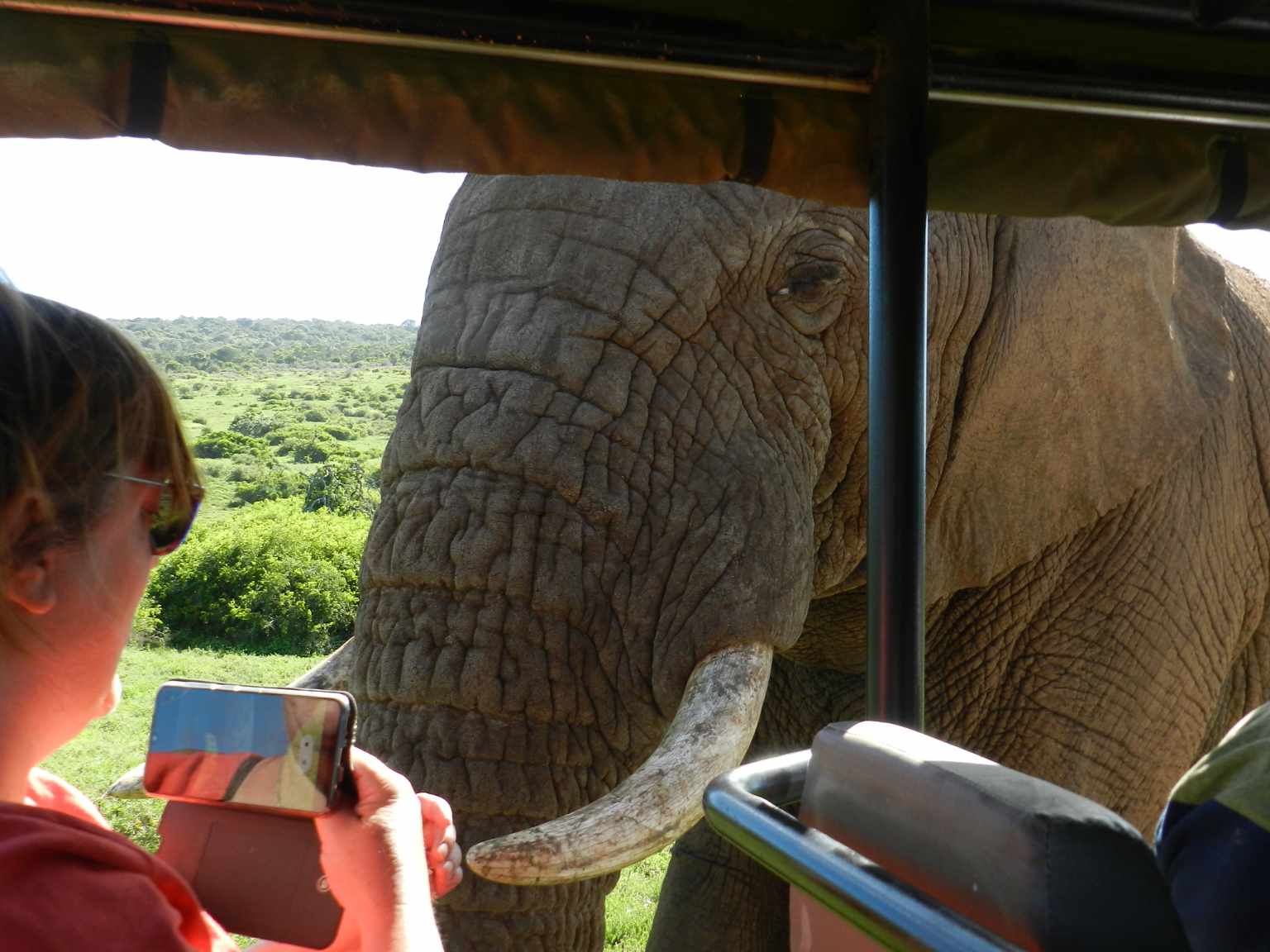
The first time I went on a guided safari in an open vehicle, I honestly didn’t feel relaxed at all. No doors. No windows. No glass. Just me, a bench seat, and a lion that could jump higher than the vehicle’s roof without much effort. It felt counterintuitive: how could this possibly be safe?
What’s strange is that after all the safaris I’ve done since; guided game drives, walking safaris, boat safaris, I still feel safer on a self-drive safari in my own rental car, like we did in Krugerpark. Which makes no sense, because scientifically and statistically, the guided safari is far safer. My brain just hasn’t fully caught up yet.
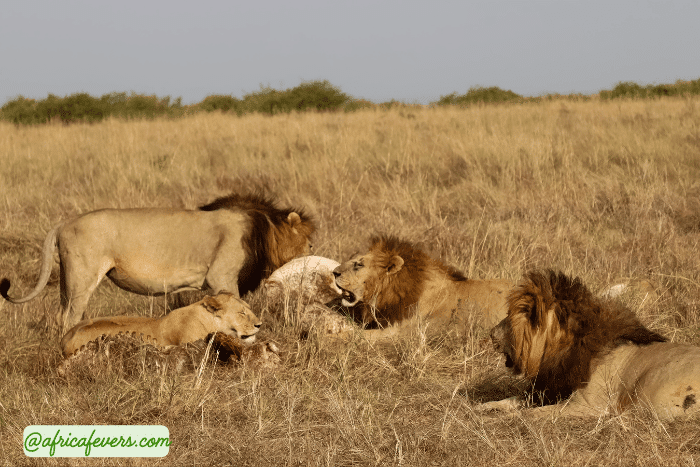
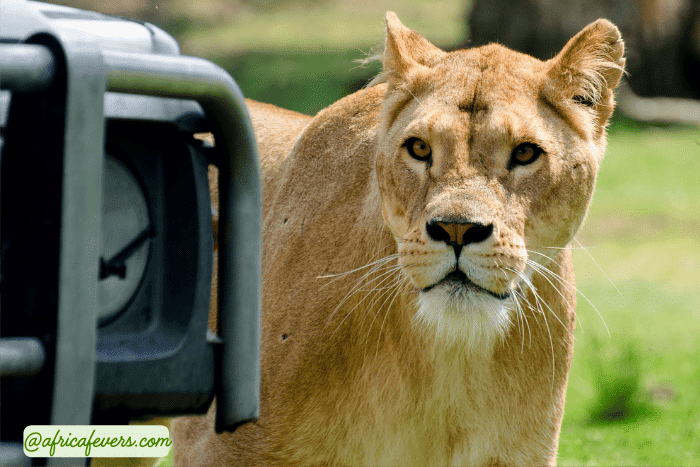
So why don’t lions attack safari vehicles, even when they’re close enough to touch?
Lions don’t see a vehicle as prey
This is the key point. Lions hunt animals they recognize as prey: individual animals that move independently, smell right, and behave like food. A safari vehicle doesn’t tick any of those boxes.
To a lion, a vehicle is:
Too large
Too noisy
Too unfamiliar
Not behaving like an animal
They don’t see “humans sitting on top.” They see one large, solid object. As long as you stay inside the vehicle and don’t stand up, wave arms, or jump out, you remain part of that object.
The moment a human separates themselves from the vehicle: standing up, leaning far out, or walking, the rules change completely.
Predators avoid unnecessary risk
Lions are powerful, but they are also careful. A hunting injury can mean death later. Chasing something that:
doesn’t run away like prey
doesn’t behave predictably
might injure them
…is simply not worth it.
A safari vehicle doesn’t trigger a hunting response. There’s no chase, no panic movement, no vulnerable target. From an energy-use perspective, it makes no sense for a lion to attack it.
Habituation plays a big role
In most safari areas, lions see vehicles every day. From a young age, they grow up watching cars pass by without anything interesting happening.
Over time, they learn:
vehicles don’t threaten them
Vehicles don’t feed them
vehicles don’t interact with them
So they ignore them.
This is also why ethical safari rules are strict about not feeding animals and not driving off-road in sensitive ways. Once animals start associating vehicles with food or stress, behavior can change, and that’s when danger increases.
We once had a safari where the driver went off the road, and I don’t think that is the correct way of doing it! But that’s a story for another day!
Why self-driving feels safer (but isn’t)
I’ll be honest: when I’m in my own rental car with the windows up, I feel calmer. There’s glass, doors, a steering wheel, and psychological barriers.
But objectively:
You’re often closer to animals without realizing it
You may misread animal behavior
You don’t have years of experience interpreting warning signs
Guides, on the other hand, read lions constantly. Ear position, tail flicks, body posture, yawning, mock charges: these are all signals. If a situation feels even slightly off, they move the vehicle long before it escalates.
My comfort level doesn’t equal actual safety. That’s an important distinction.
Why do attacks sometimes happen
Almost every documented lion incident involving vehicles shares one of these factors:
Someone stood up or leaned far out
Someone exited the vehicle
night driving without proper protocols
Animals were provoked or blocked
Food smells or careless behavior attracted attention
In other words: human error, not random aggression.
To my shame, I once stood up in a vehicle in Schotia game reserve, and I swear, although nothing happened, I’m never doing that again, just to have a nice picture or TikTok video, it’s not worth it!
The uncomfortable truth
It feels wrong to sit exposed next to one of Africa’s top predators. Your instincts are screaming that this shouldn’t work.
But those instincts evolved for encounters on foot, not for sitting quietly as part of a large, non-prey object.
Even after many safaris, I still get that uneasy feeling sometimes. I just know now that it’s emotional, not logical.
Who am I? Well, the least you can say is that I am quite crazy about Africa, its nature, its climate, its culture, and more.
As a young woman in my twenties, I had already traveled to several African countries by traveling along in an overlander on my own and mostly camping ( or glamping ) and just fell in love with the diversity of it all.
So much, so that at the age of 26, I went back to university to study biology, which, unfortunately, I couldn’t finish because of health reasons (yes, I got sick from a tropical disease, oh cynicism). But this did not stop my dream of traveling back to Africa several times, and I still do.
My dream was back then to leave Europe and go study animal behavior, especially the elephants (sure, that’s every girl’s dream haha), but I am also very much intrigued by hyenas and other “ugly African animals“.
So, I “kind of” have a little bit of a scientific approach to my articles, when I write about African birds, for example. And most of all: the passion.
But life goes on, you move from one side of the country to the other, you get sick again and top it off with lower back problems, and before you know it, you are over 50 hahaha!
Now, I still travel to Africa, but take it a bit “easier” than the good old camping days, and stay in comfortable, yet affordable accommodations, together with my husband Wouter.
These are some of the countries I have traveled to: Kenya, Tanzania, Zanzibar, Malawi, Zambia, Zimbabwe, South Africa, Namibia, Botswana, Tunisia, and a little bit of Lesotho LOL .
While clearly not being African territory, but Spanish, I also visited Gran Canaria and Tenerife, and location-wise, I consider them “African”, because of their climate and nature, sue me :-p
The last trip I took was to South Africa in the year 2023, and it sure got the fevers for Africa back! From the Barberton mountains to the Drakensberg and the Southcoast, one month wasn’t enough at all to see the whole country, so we’ll be back! At ease and with a little bit more luxury than in my younger days haha!